Warehouse Operations Simplified

Author name: Gaju Don

Quality Control In Warehouse
Knowledge Series

Quality Control In Warehouse

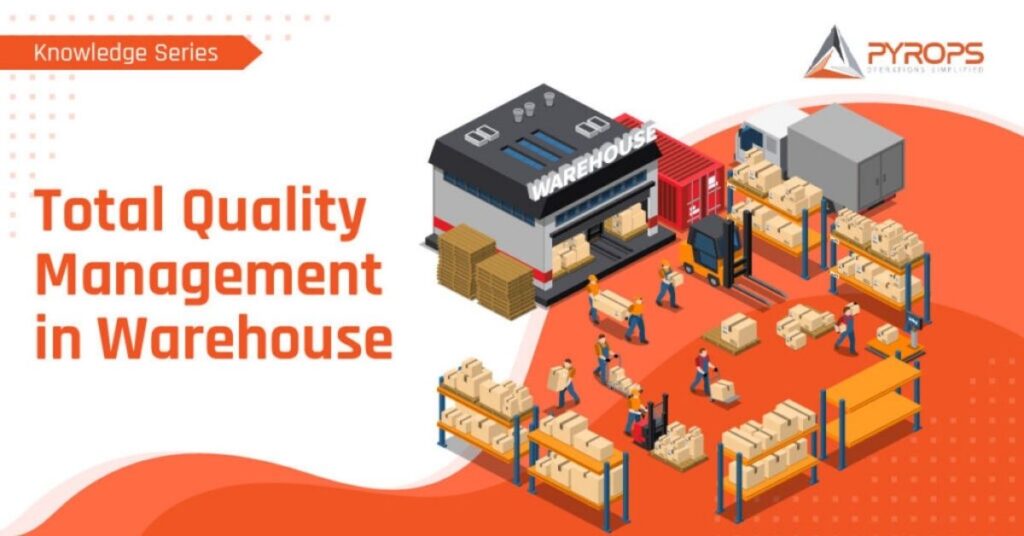
Quality control in warehouses is important to the success of an organization and its business. Focusing on the quality of each order, monitoring and adjusting protocols and processes based on key metrics for the proper packing and shipping of each order can improve the efficiency of operations. Keeping tabs on metrics such as how long it takes to pick, safely package, and correctly fill an order, to then load it properly before it ships out are all fundamental to improving product quality. What Is Quality Control In A Warehouse? In the dynamic world of warehouse operations, a warehouse quality checker plays a pivotal role in maintaining efficiency, minimizing errors, and safeguarding customer satisfaction. Warehouse quality control encompasses a comprehensive set of practices aimed at monitoring and evaluating the quality of warehouse operations and ensuring that all work adheres to established standards. Effective QC in warehouses extends beyond the confines of the warehouse walls, encompassing the entire process of receiving and dispatching goods. This includes meticulously inspecting incoming shipments to ensure that products meet the specified quality standards before they are stored or distributed. This level of vigilance helps protect your reputation and ensures that your customers, or your customers’ consumers if you are a third-party logistics (3PL) warehouse, receive only the highest quality goods. Quality control in warehouse management extends far beyond mere product inspection; it encompasses a holistic approach to optimizing warehouse operations and minimizing inefficiencies. By implementing rigorous quality control measures, businesses can identify and address potential bottlenecks, streamline processes, and reduce the likelihood of errors. This, in turn, leads to improved efficiency, reduced costs, and enhanced customer satisfaction. Importance of Quality Control In warehouse Quality in the warehouse operations is of paramount importance for ensuring that products are stored, handled, and shipped in a manner that maintains their quality and integrity. It plays a crucial role in safeguarding customer satisfaction, minimizing errors and losses, and optimizing warehouse operations. Enhancing Customer Satisfaction Effective quality control in warehouse management measures directly contributes to customer satisfaction by ensuring that products reach customers in a timely, undamaged, and defect-free condition. This, in turn, fosters customer loyalty, reduces the likelihood of returns and complaints, and enhances the overall perception of the brand. Minimizing Errors and Losses QC in the warehouse helps prevent costly errors and losses that can arise from damaged goods, incorrect shipments, or mishandling of products. By implementing rigorous quality control procedures, businesses can identify and address potential issues early on, reducing the risk of financial losses and reputational damage. Optimizing Warehouse Operations Warehouse quality management promotes efficiency and consistency within warehouse operations. By establishing clear quality standards and implementing effective control measures, businesses can streamline processes, reduce rework, and minimize downtime. This, in turn, leads to cost savings, improved productivity, and enhanced overall warehouse performance. Keeping tabs on metrics such as how long it takes to pick, safely package, and correctly fill an order, to then load it properly before it ships out are all fundamental to improving product quality. Total Quality Management (TQM) Total Quality Management (TQM) is a manufacturing philosophy, which focuses on improving quality across the operations, and producing higher quality products with few defects. Total quality management is a structured approach to overall organizational management. The focus of the process is to improve the quality of an organization’s outputs, including goods and services, through the continual improvement of internal practices.  Total warehouse quality assurance extends beyond mere product inspection; it permeates every stage of the warehouse process. It involves establishing clear quality standards, implementing rigorous quality control measures, and empowering employees to take ownership of quality improvement initiatives. This comprehensive approach ensures that quality remains at the forefront of warehouse operations, minimizing errors, reducing costs, and ultimately enhancing customer satisfaction. The standards set as part of the TQM approach can reflect both internal priorities and any industry standards currently in place. Industry standards are defined at multiple levels and may include adherence to various laws and regulations governing the operation of a particular business. Industry standards can also include the production of items to an understood norm, even if the norm is not backed by official regulations. Principles of TQM Customer Focus Leadership Employee involvement Process-centric approach Strategic and systematic approach Continous improvement Data centric approach Mutually beneficial supplier relations How to improve Quality in a Warehouse? Supply chains are networks that require fast and clear communication about accurate information on supply and demand. Implementing effective quality control (QC) in warehouse management can save the facility money by identifying and reducing wasted orders, time, energy, and materials. Here are ways to improve quality in warehouse operations which will make operations more competitive and favorable to stakeholders involved. Inspect individual orders Invest in streamlining technology Track daily progress Make quality control a high priority Tighten up quality controls Tools to control Quality check process in warehouse Warehouse quality checker benefits a warehouse in that it should successfully catch issues early on and limit any future mistakes. This can help tighten up inefficient processes or aid in diagnosing a specific problem and improve warehouse efficiency. Seven warehouse quality checker tools that help organizations troubleshoot errors are illustrated below Cause & Effect Daigram Check Sheet Flow Chart Histogram Pareto Chart Scatter Diagram 5S in warehouse The 5S is a lean strategy that helps to achieve warehouse objective i.e. to solve the problems. Getting a warehouse that is clean, organized, and much more than looking fantastic. It is all about making warehousing operations most effective; excel in training and communications, and eventually saving money and time. A facility that has introduced 5S can rapidly detect or surface problems or address the causes and fix the brief-term challenges to avoid recurrence. Let us look the 5S steps for implementing 5S in the Warehouse. Sort- Seiri Set in Order- Seiton Shine- Seiso Standardize- Seike Sustain- Shitsuke Elevate Warehouse Quality Assurance Pyrops WMS is committed to providing comprehensive warehouse management solutions (WMS) tailored to your specific quality control needs. Our team of experienced


License Plate
Knowledge Series

License Plate

Manual or outdated processes often slow warehouse operations. With evolving technology and a significant shift towards automation, warehouse operators are constantly assessing what additions to implement for increased efficiency. One such process to consider automating is how you scan and track inventory – using license plates. Inventory license plating plays a crucial role in the identification process to mark a pallet or group of materials and products. Warehouse automation is revolutionizing inventory management through the utilization of warehouse license plates (LPNs) within warehouse management systems (WMS).Warehouse automation is revolutionizing inventory management through the utilization of warehouse license plates (LPNs) within warehouse management systems (WMS). A primary benefit of LPN WMS is its ability to move entire pallets or groups of materials without individually scanning each item. This streamlines inventory management, reducing the risk of errors and improving efficiency. WMS LPN systems provide workers with a single scan to track and access critical data, easing the burden of manual data entry and error-prone processes. What is a License Plate? License plating is a barcode reader system that groups together any set of materials or products and marks it with a unique number known as a License Plate Number (LPN). The identifier, called a License Plate Number (LPN), is assigned to a pallet, truck, product set, etc. Moreover, the LPN number can also be assigned to the whole shipment or partial shipment depending on how one wants to receive or deliver the products. The LPN is tracked via barcode or RFID onto an LPN label for a quick, easy scan. As a result, the scan provides all information included in the LPN. Additionally, a single license plate can contain multiple data points, such as: What is lpn in the warehouse? Optimizing efficiency is paramount to ensuring smooth order fulfillment in any warehousing operations. The integration of technology plays a pivotal role in achieving this goal, and Warehouse License Plate Numbers (LPN) have emerged as a cornerstone in this pursuit. LPN warehouses have revolutionized the way inventory is scanned and tracked, introducing a level of precision and accuracy that was previously unattainable. The synergy of LPN barcode scanners and LPN in Warehouse Management Systems (WMS) ensures a seamless and accurate identification process. LPN barcode scanners enable operators to quickly and easily capture LPN data, while LPN in WMS provides a centralized repository for this information. This integrated approach allows for precise marking of pallets and efficient management of materials throughout the warehouse, streamlining operations and enhancing overall productivity. How does License plating help businesses? License plate numbers (LPN’s) help in distinguishing each item for better lot management and traceability, and they also reduce the number of scans required to enter during a transaction. More specifically, license plating can help your businesses be more efficient in multiple ways. Firstly, it enables streamlined inventory management, allowing for easier tracking of items throughout the supply chain. Secondly, it facilitates faster order fulfillment as products can be grouped together and processed as a single unit. Additionally, license plating enhances accuracy in shipping and receiving processes, reducing the risk of errors and minimizing potential delays.  Moreover WMS LPN, it simplifies warehouse operations, making it easier for workers to locate, pick, and pack items. Furthermore, license plating promotes better data visibility and analysis, enabling businesses to make informed decisions and optimize their logistics strategies. Overall, implementing a license plating system in  a warehouse management system can significantly improve your operational efficiency and enhance your overall supply chain management. Role of License plate numbers (LPN) in warehouse Inbound Operations Role of LPN in Outbound operations The LPN Process can be used for internal transfers between the plants or different warehouses. Advantages of using LPN WMS Read More: Barcode scanning an overview

VAS In Warehouse
Knowledge Series

VAS In Warehouse

Value-added services (VAS) in logistics play a crucial role in enhancing customer satisfaction for businesses. They have become an indispensable tool for providing comprehensive benefits. In supply chain management (SCM), warehouse value-added services hold significant importance. These services offer numerous advantages to businesses, such as enhancing efficiency and quality, addressing storage needs, and freeing up time for business expansion. A value-added service (VAS service) extends beyond the typical warehousing scope, encompassing additional services that a warehouse or third-party logistics (3PL) provider can offer to clients, surpassing the standard storage and shipping services. Value addition includes kitting, bundling, re-branding, customization, re-packaging, and work order processing (where components are put together to create a new item). These services are customizable to the client’s needs whether shipping retail goods, perishable cargo or high-tech devices to streamline logistics & reduce costs. Why do you need them? How do VAS help businesses’ supply chains & logistics? Forward-thinking companies leverage their supply chain to gain a competitive edge and market share. Entrepreneurs now widely adopt supply chain excellence as a vital business strategy. To stay ahead and outperform competitors, businesses must revamp traditional supply chains. This presents an opportunity for specialists to propose VAS solutions, driving accelerated supply chain innovation. Increased price wars and competition Outsourcing Complex & shortened Product lifecycles Types of VAS Cross Docking Transloading Palletizing Kitting Returns processing Labelling Repacking Postponement services Sorting & Inspection Benefits of VAS Flexibility Quality Ease of integration Closing Thoughts

KPIs for Warehouse
Knowledge Series

KPIs for Warehouse

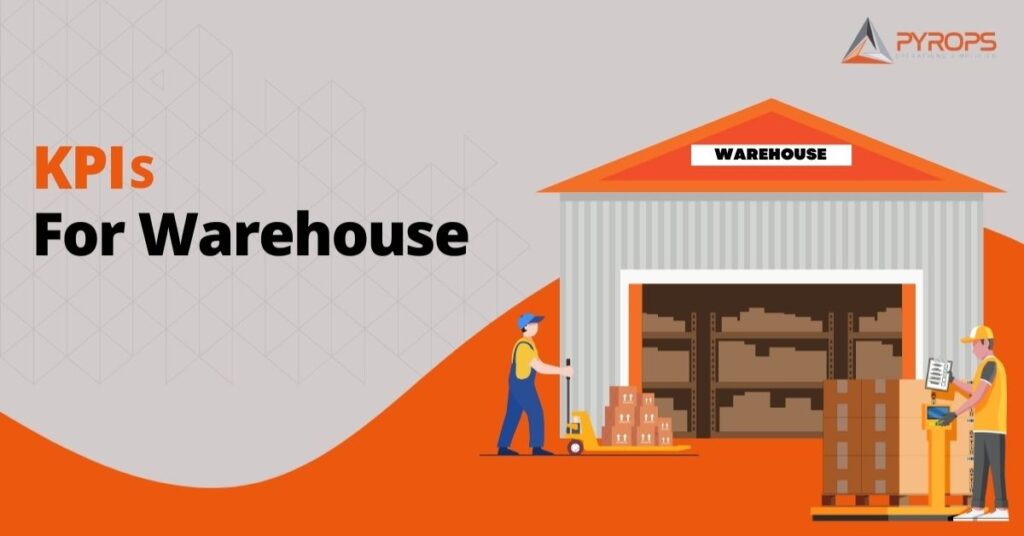
A warehouse runs smoothly when it handles incoming and outgoing goods, manages inventory well, and keeps operational costs low. Warehouse Key Performance Indicators (KPIs) help measure performance, find areas to improve, and make smart decisions. This article breaks down crucial Warehouse Management KPIs, organizing them into sections for inbound, outbound, and inventory management. In this article, we will discuss the various KPIs to monitor for warehouse operations and categorize them into inbound, outbound, and inventory management sections. What Are Warehouse KPIs? Warehouse key performance indicators mainly focus on the efficiency of receiving and shipping inventory, along with the accuracy and speed of these operations. These metrics provide a clear overview for management, showcasing the warehouse’s performance trends and indicating whether progress is aligned with broader organizational objectives. Key Performance Indicators (KPIs) for warehouses offer comprehensive insights into inventory status and overall warehouse performance. However, with numerous warehouse operations, manually tracking everything becomes challenging. Warehouse management systems play a crucial role in identifying specific KPIs that require close monitoring, ensuring efficient measurement of productivity and effectiveness. Benefits of Warehouse Management KPIs Tips on KPIs For Warehouse Selecting the right KPIs: Monitoring and analyzing KPIs: Taking action based on KPI insights: Best Practices For Warehouse Key Performance Indicators Inbound KPIs Receiving efficiency: Measures the time taken to unload, inspect, and put away incoming shipments. Dock-to-stock time: Measures the time taken from when a shipment arrives at the dock to when it is put away in its designated location. Put-away accuracy: Measures the number of items put away correctly in their designated location, without any discrepancies or errors. Receiving accuracy: Measures the number of items received correctly, without any discrepancies or errors. Order fill rate: Measures the percentage of orders that are accurately filled on the first attempt. Outbound KPIs Order picking accuracy: Measures the percentage of orders that are accurately picked and shipped to customers. Order cycle time: Measures the time taken from when an order is received to when it is shipped to the customer. Order lead time: Measures the time taken from when an order is placed to when it is delivered to the customer. Shipping accuracy: Measures the number of items shipped accurately, without any discrepancies or errors. Order delivery performance: Measures the percentage of orders that are delivered on time. Inventory Management KPIs Inventory accuracy: Measures the percentage of inventory that is accurately accounted for in the warehouse. Stockout rate: Measures the percentage of times that items are out of stock when a customer places an order. Carrying cost of inventory: Measures the cost of holding inventory in the warehouse, including storage, insurance, and handling costs. Inventory turnover: Measures how often inventory is sold and replaced over a given period of time. Obsolete inventory: Measures the percentage of inventory that has not been sold within a given period of time. Suitability of KPIs for Different Scale of Operations The KPIs that are suitable for warehouse operations depend on the scale of the operation. For small-scale operations, KPIs such as dock-to-stock time, order fill rate, and order picking accuracy are important to ensure that shipments are received and sent out efficiently and accurately. For medium-sized operations, KPIs such as inventory accuracy, stockout rate, and inventory turnover become more important as inventory management becomes a critical factor in maintaining profitability. For large-scale operations, KPIs such as order cycle time, order lead time, and carrying cost of inventory become more important as operational costs increase and efficient management of inbound and outbound flows becomes critical. Conclusion KPIs provide a valuable way to measure warehouse performance and identify areas for improvement. The KPIs to monitor for warehouse operations can be categorized into inbound, outbound, and inventory management sections. The suitability of these KPIs for different scales of operations depends on the specific needs of the operation. By monitoring and optimizing these KPIs, warehouse operations can achieve improved efficiency, profitability, and customer satisfaction.

understanding the perfect order metric in warehouse order processing
Knowledge Series

Perfect Order Metric: Achieving Error-Free Order Fulfillment

In the realm of warehouse order processing, striving for perfection is a key objective. The perfect order metric serves as a crucial measure of success in ensuring customer satisfaction and optimizing operational efficiency. In this article, we will delve into the definition, importance, and practical application of the perfect order metric, equipping warehouse users with valuable knowledge to enhance their order processing capabilities. The perfect order metric represents the successful fulfillment of a customer’s order without any errors or issues throughout the entire order processing journey. It encompasses various elements, including accurate product selection, precise quantities, timely delivery, intact packaging, correct documentation, and overall customer satisfaction. Achieving a perfect order implies a seamless and error-free experience for the customer. The Importance of the Perfect Order Metric: Customer Satisfaction: The perfect order metric is directly tied to customer satisfaction. By consistently delivering orders without errors, customers experience a hassle-free transaction, resulting in increased loyalty, positive reviews, and repeat business. Meeting and exceeding customer expectations is paramount in today’s competitive market. Cost Efficiency: An error in order processing can be costly for a Warehouse. It often leads to additional expenses such as returns, replacements, and reshipments. By striving for the perfect order, warehouses can minimize these costs, resulting in improved operational efficiency and better resource allocation. Operational Effectiveness: It acts as a guiding principle for warehouses to optimize their operations. It encourages the implementation of streamlined processes, accurate inventory management, efficient picking and packing techniques, and robust quality control measures. This leads to increased productivity, reduced rework, and improved overall performance. Reputation and Brand Image: A reputation for delivering perfect orders enhances a warehouse’s brand image. Positive word-of-mouth spreads, attracting new customers and establishing trust within the market. In contrast, repeated errors can tarnish a warehouse’s reputation, negatively impacting its standing in the industry. Practical Application of the Perfect Order Metric: Warehouse users can implement the following practices: Accurate Inventory Management: Maintain up-to-date and accurate inventory records to ensure the availability of products and reduce the chances of stockouts or incorrect order fulfillment. Efficient Order Picking and Packing: Implement efficient picking methods, such as zone picking or batch picking, to optimize the order fulfillment process. Use clear labels, barcodes, or RFID technology to ensure accurate product identification during packing. Robust Quality Control: Establish stringent quality control measures to detect and rectify errors before orders leave the warehouse. This can include thorough inspections, barcode scanning, weight verification, and packaging integrity checks. Effective Communication and Collaboration: Promote clear communication between warehouse teams to minimize misunderstandings and errors. Emphasize the importance of collaboration across different departments involved in the order processing cycle. Continuous Improvement: Regularly review and analyze order processing data to identify areas for improvement. Implement feedback loops, gather customer feedback, and conduct performance evaluations to enhance processes and maintain the perfect order standard. Conclusion The perfect order metric serves as a critical benchmark for warehouses striving for excellence in order processing. By understanding its definition, recognizing its importance, and implementing the necessary practices, warehouse users can enhance customer satisfaction, drive cost efficiency, optimize operations, and build a strong brand reputation. Embracing the pursuit of the perfect order sets the stage for a successful and customer-centric warehouse operation.

Knowledge Series

Advanced Shipping Notice: Why it Matters in Today’s Supply Chain

Fulfillment speed and accuracy can make or break operations, and even a few hours of inbound uncertainty can trigger delays and stockouts. This is where the Advanced Shipment Notice (ASN) steps in — a quietly powerful tool that strengthens warehouse visibility and supplier coordination. What is ASN? An Advanced Shipment Notice (ASN) is an electronic document (or digital message) sent by a supplier or shipper to the receiving warehouse or customer before the actual shipment arrives. In this blog, we will talk about ASNs when specific to warehouse deliveries.  It provides advanced details such as: Think of it as a digital heads-up â€” the supplier saying: â€œHere’s what’s on its way to you, and here’s how it’s packed.” Purpose of ASN The goal of ASN is simple but powerful:To prepare the warehouse for receiving — before the truck even arrives. By knowing what is coming, how much, and when, the receiving warehouse can: In essence, the ASN bridges the gap between supplier dispatch and warehouse receipt, enabling a smoother, paperless inbound process. How ASN is used in Practice In a practical warehouse setup, ASN plays out like this: The Real-World Benefits Companies that adopt ASN report tangible improvements such as: In high-volume industries like FMCG, retail, automotive, and e-commerce, ASNs are the backbone of inbound synchronization — ensuring every warehouse knows what’s arriving, before it arrives. Challenges in ASN Adoption Despite its advantages, many warehouses — especially small and mid-sized ones — still operate without ASN.Here’s why adoption remains uneven: The Way Forward As supply chains digitize, ASN is becoming non-negotiable â€” especially in B2B commerce and e-commerce ecosystems where inbound visibility drives customer SLAs. Modern WMS platforms now offer: The future lies in making ASN simpler, standardized, and universally adopted, so that even a small regional supplier can digitally collaborate with large 3PLs and distribution networks. Ensure the picking and packing of your warehouses have a smooth flow with Pyrops WMS. Learn More Conclusion The Advanced Shipment Notice may seem like a small digital document — but its impact on warehouse efficiency, cost, and accuracy is enormous. By reducing surprises at the dock, improving inbound coordination, and enabling paperless workflows, ASN turns receiving from a reactive function into a planned, data-driven process. As the supply chain world embraces automation, the humble ASN is finally stepping into the spotlight — becoming a silent yet powerful enabler of smart, synchronized warehousing.

Knowledge Series

Warehouse Reality vs PowerPoint: Why Processes Break on the Floor

What looks efficient in process charts often plays out very differently on the warehouse floor. Behind every delayed dispatch, stock mismatch, or last-minute coordination call, there is usually a gap between how operations are designed and how they actually run. Understanding that gap is key to understanding why warehouses struggle with control—and what it really takes to fix it. What is ASN? An Advanced Shipment Notice (ASN) is an electronic document (or digital message) sent by a supplier or shipper to the receiving warehouse or customer before the actual shipment arrives. In this blog, we will talk about ASNs when specific to warehouse deliveries.  It provides advanced details such as: Think of it as a digital heads-up â€” the supplier saying: â€œHere’s what’s on its way to you, and here’s how it’s packed.” Purpose of ASN The goal of ASN is simple but powerful:To prepare the warehouse for receiving — before the truck even arrives. By knowing what is coming, how much, and when, the receiving warehouse can: In essence, the ASN bridges the gap between supplier dispatch and warehouse receipt, enabling a smoother, paperless inbound process. How ASN is used in Practice In a practical warehouse setup, ASN plays out like this: The Real-World Benefits Companies that adopt ASN report tangible improvements such as: In high-volume industries like FMCG, retail, automotive, and e-commerce, ASNs are the backbone of inbound synchronization — ensuring every warehouse knows what’s arriving, before it arrives. Challenges in ASN Adoption Despite its advantages, many warehouses — especially small and mid-sized ones — still operate without ASN.Here’s why adoption remains uneven: The Way Forward As supply chains digitize, ASN is becoming non-negotiable â€” especially in B2B commerce and e-commerce ecosystems where inbound visibility drives customer SLAs. Modern WMS platforms now offer: The future lies in making ASN simpler, standardized, and universally adopted, so that even a small regional supplier can digitally collaborate with large 3PLs and distribution networks. Ensure the picking and packing of your warehouses have a smooth flow with Pyrops WMS. Learn More Conclusion The Advanced Shipment Notice may seem like a small digital document — but its impact on warehouse efficiency, cost, and accuracy is enormous. By reducing surprises at the dock, improving inbound coordination, and enabling paperless workflows, ASN turns receiving from a reactive function into a planned, data-driven process. As the supply chain world embraces automation, the humble ASN is finally stepping into the spotlight — becoming a silent yet powerful enabler of smart, synchronized warehousing.

Pyrops® WMS is a warehouse management software designed, developed, and implemented by Precision Pyramid Private Limited.

For more info visit: www.precisionpyramid.com

India Head Office

A-1, Forest Lane, Near Ghitorni Metro Station, MG Road, Sultanpur, New Delhi – 110030

Nepal Corporate Office

Precision Pyramid Nepal Private Limited 6th Floor, Radha Bhawan, Tripureshwar, Kathmandu, Nepal

Contacts

Follow us

Scroll to Top